The adorable capital city of Portugal will dazzle your emotions. We will help you to make the most of your visit.
Great experiences, fantastic attractions, delicious food and a vibrant culture are all waiting for you in Lisbon.
A local expert who will host you and be there to assist you throughout your visit, taking you on personalized tours tailored to your demands, while explaining you all the interesting details and stories about Lisbon.
| Half Day (4 Hours) | Full Day (8 Hours) | |
| Up to 4 guests | €120 | €200 |
| From 5 to 8 guests | €160 | €260 |
| 9–16 guests | €20 per guest | €30 per guest |

Click below to find answers.



Our guides are passionate Lisboa locals who bring the city's stories to life.

Discover hidden gems and local favorites that you won't find in guidebooks.

We offer a variety of tours to suit different interests and schedules.

Ocuppying a great part of one of Lisbon's seven hills, Bairro Alto is a charmy bohemian and vibrant neighbourhood known for its effervescent nightlife and relaxed atmosphere. With its narrow, cobbled streets, the neighbourhood is a maze of bars, restaurants and fado houses that attract locals and tourists likewise. During the day, Bairro Alto reveals a quieter and more charming side, with alternative shops, art galleries and cosy cafés
At night, it becomes one of the city's liveliest entertainment centres, where you can listen to a variety of music ranging from traditional fado to jazz and rock. In addition, the neighbourhood offers spectacular panoramic views over Lisbon and the River Tagus, especially from the São Pedro de Alcântara viewpoint. This contrast between day and night makes Bairro Alto one of the most iconic and beloved places in the Portuguese capital.

Baixa is located in the heart of Lisbon's old town and is a vibrant and historic area that reflects the visionary reconstruction after the devastating 1755’s earthquake. Planned by the Marquis of Pombal, Baixa is known for its wide avenues, elegant squares and neoclassical architecture. This neighbourhood, which stretches from Praça do Comércio to Rossio, is the commercial and tourist centre of the city and is full of traditional shops, historical cafés and restaurants offering ‘a view’ of Portuguese gastronomy.
The most notable landmarks of this area include the Elevador de Santa Justa, Rua Augusta with its iconic triumphal arch, and Praça Dom Pedro IV, known as Rossio, with its rippling mosaic pavements. Baixa is a witness of Lisbon's resilience and a perfect example of how the city synchronises tradition and modernity.

The Belém area is the home of the most emblematic monuments linked to the Age of Discoveries. Situated alongside the River Tagus, Belém is the setting for the iconic Jerónimos Monastery and the Belém Tower, both UNESCO World Heritage sites that exemplify Manueline-style architecture. This area of Lisbon is also famous for the Padrão dos Descobrimentos, which pays tribute to Portuguese sailors, and the Centro Cultural de Belém, an important space for exhibitions and cultural events.
Visitors to Belém should not miss the world-famous custard tarts sold at the traditional ‘Pastéis de Belém’. With its well-preserved gardens, museums such as the Museum of Art, Architecture and Technology (MAAT) and the Carriage Museum, as well as a privileged view of the Tagus River, Belém is an absolute must-see that offers a deep dive into Portuguese history and culture.

Alfama is one of Lisbon's oldest and most emblematic neighbourhoods, known for its picturesque charm, its tight, labyrinthine streets and its old buildings decorated with colourful ceramic tiles (azuleijos). This historic neighbourhood, which survived to the great earthquake of 1755, retains the atmosphere of a village within the city, where community life and Portuguese traditions are deeply rooted. Alfama is the birthplace of fado, the melancholic traditional Portuguese music, being possible to hear its nostalgic melodies echoing through the local alleys and taverns.
Points of interest such as the Castelo de São Jorge, the Miradouro de Santa Luzia and the Sé de Lisboa add an incomparable historical and cultural value to the neighbourhood, making Alfama an unmissable destination for those who want to experience the true essence of Lisbon.

Located on the slopes of São Vicente hill, this neighbourhood is rich in cultural and architectural heritage, housing some of the city's most significant landmarks, such as the Monastery of São Vicente de Fora, an impressive work in the Mannerist style and one of the most important monasteries in Portugal. The streets of São Vicente are characterised by a mix of old buildings, belvederes with breath taking views over the city and the Tagus River, and small shops that preserve Lisbon's authenticity.
This neighbourhood is also known for the Feira da Ladra, a popular flea market that takes place twice a week, attracting both locals and visitors searching for antiques and curiosities. With its relaxing atmosphere and palpable sense of history, São Vicente offers a unique experience that captures and combines the essence of old and new Lisbon.

Mouraria, located in the heart of Lisbon, is another of the city's oldest and most traditional neighbourhoods, known for its rich history and cultural diversity. This historical neighbourhood dates back to the medieval period, and it was home to the Moors after the Christian reconquest. Today, Mouraria is a vibrant mosaic of cultures, home to communities from various parts of the world.
The neighbourhood is famous for its authentic atmosphere, narrow winding streets and the legacy of fado, traditional Portuguese music, which resonates through its alleys and taverns. In addition, Mouraria is a space for social and artistic innovation, with abundant community and cultural projects that celebrate and preserve the neighbourhood's rich multicultural heritage.
Tram 28 is one of the most famous and iconic trams in Lisbon. It runs through the historic districts of the city, including Graça, Alfama, Baixa, and Estrela.
The tram is a popular tourist attraction, thus very often over-crowded. But it allows an insteresting way to explore the city.
The Cathedral of Santa Maria Maior is the oldest and most important Catholic church in the city. Its construction began in 1147, shortly after the Crusaders conquered Lisbon.
Originally built in the Romanesque style, it has suffered numerous reconstructions over the centuries. It is located in the neighbourhood of Santa Maria Maior, the oldest part of the city, once surrounded by the walls of Roman fortifications.
Sitting proudly on the top of Lisbon's first occupied hill, in the heart of Lisbon's old town, São Jorge Castle is a magnificent historical landmark. It offers a pleasant and breathtaking panorama of the city, as well as a rich history ready to be discovered.
Since the 12th century, the castle has served as a royal palace, military barracks, the headquarters of the Torre do Tombo National Archive and, currently, as a national monument and museum.
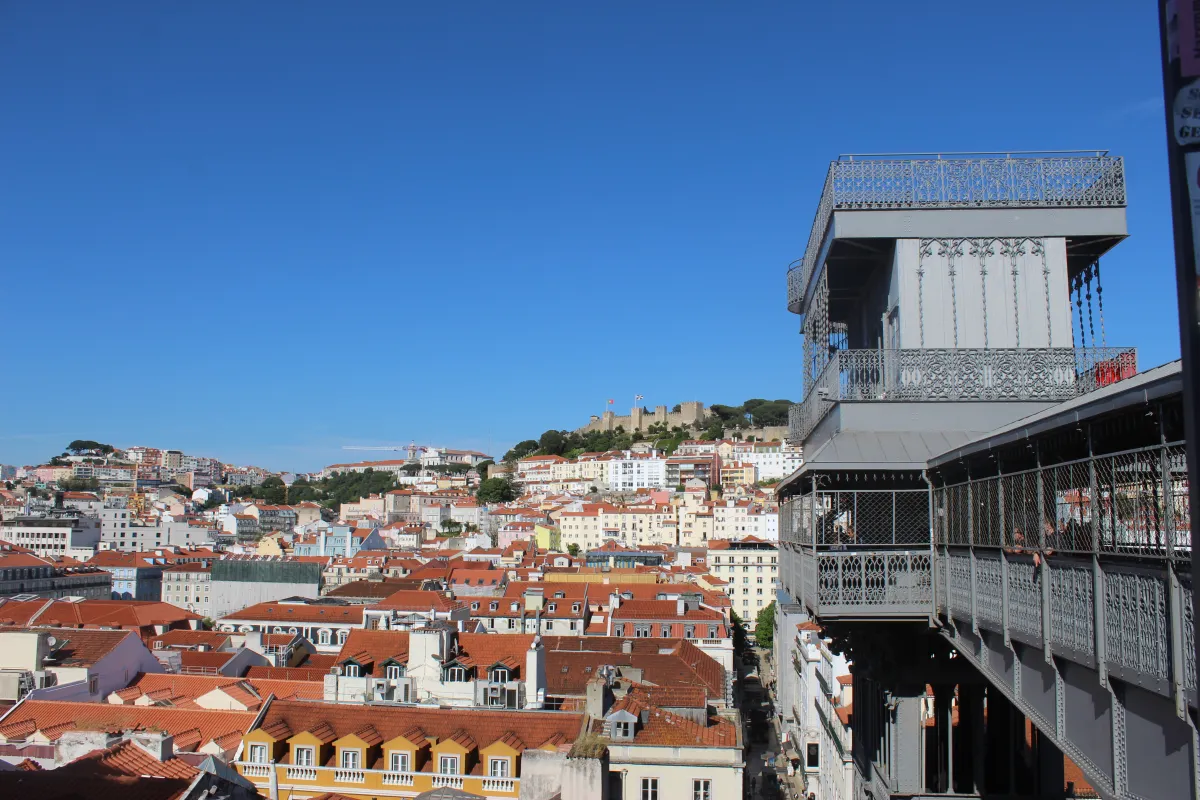
The Santa Justa Elevator is an iconic Lisbon landmark that connects the lower streets of the Baixa district with the higher streets of the Chiado district. It was built in 1902 by the Portuguese architect Raoul Mesnier du Ponsard.
The elevator is made of wrought iron and has a unique design that combines elements of the Neo-Gothic and Art Nouveau architectural styles. It is a popular tourist attraction.
Being one of the most iconic places in Lisbon, 'Praça do Comércio' is a big square located in the heart of Downtown Lisbon, on the banks of the Tagus River, this famous square is also known as Terreiro do Paço, the “Patio of the Palace”.
The yellow building that surrounds the square was Lisbon's main Royal Palace until the last moments of the Portuguese Monarchy. The palace was built at the early 16th century and later rebuilt after being severely damaged by the great 1755 Lisbon earthquake and subsequent tsunami.
The Jerónimos Monastery is a masterpiece of the Manueline style, a Portuguese late-Gothic architectural style unique to Portugal. It was built in the early 16th century by King Manuel I, to commemorate Vasco da Gama's voyage to India.
The monastery is a UNESCO World Heritage Site and is considered one of the most important monuments in Portugal. It is located in the Belém district of Lisbon, near the Tagus River.
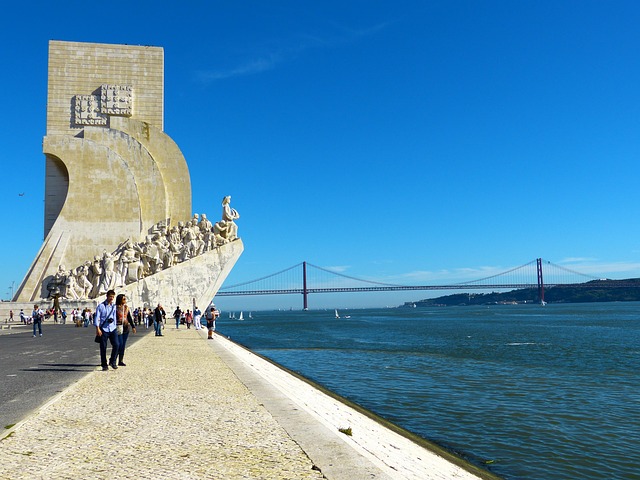
The Monument to the Discoveries is a tribute to the Portuguese Age of Discovery, a period of time when Portugal was at the forefront of global exploration. The monument was built in 1960 to commemorate the 500th anniversary of the death of Prince Henry the Navigator.
The monument is located in the Belém district of Lisbon, near the Jerónimos Monastery. It is a popular tourist attraction and offers a panoramic view of the Tagus River and the surrounding area.
This important symbol of Lisbon and the ‘Age of Discoveries’ was built between 1514 and 1520, during the “heart” of the Portuguese Renaissance. The main purpose of the Belém Tower was to protect Lisbon and its surroundings from invading enemy armies.
Since 1983, the Belém Tower has been a UNESCO World Heritage Site. This magnificent monument denotes the great importance and immense maritime and colonial power of the Portuguese Empire during the Age of Discoveries